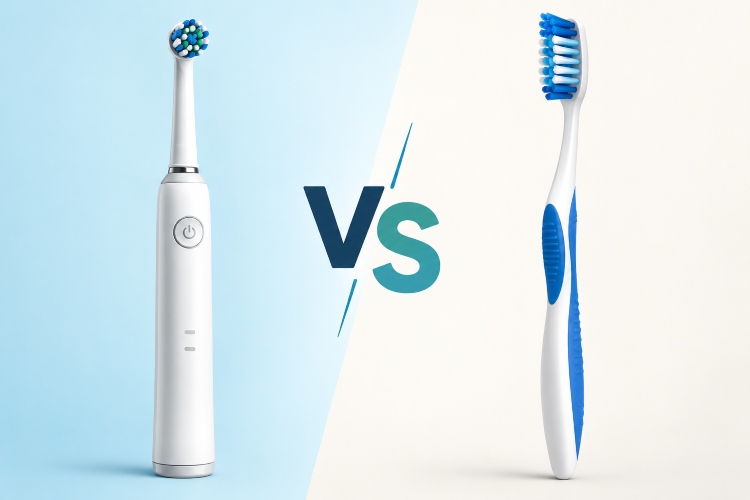
So, are electric toothbrushes better than manual brushes? For many people, an electric toothbrush can make brushing easier and may provide an advantage for plaque removal. However, technique, brushing time, and consistency still matter regardless of which toothbrush you use.
How Do Electric and Manual Toothbrushes Differ?
A manual toothbrush relies entirely on your hand to move the bristles across your teeth and along the gumline. With the right technique, a manual toothbrush can effectively clean your smile.
An electric toothbrush relies on motor-driven motions to move the brush head on your behalf. Depending on the model, it may use oscillating, rotating, or sonic technology. Many electric toothbrushes also include features such as built-in timers or pressure sensors.
The biggest difference is that an electric toothbrush does some of the work for you. This can be particularly helpful for people who have difficulty using a manual toothbrush effectively.
Can an Electric Toothbrush Remove More Plaque?
One of the main reasons people choose an electric toothbrush is its potential to improve plaque removal.
Powered brush heads make repeated movements while you guide the toothbrush from tooth to tooth. This can help provide more consistent cleaning, particularly around areas that are easy to miss with a manual toothbrush.
However, an electric toothbrush is not a replacement for good brushing habits. You still need to clean all surfaces of your teeth, reach the gumline, and brush for an adequate amount of time.
The best toothbrush is ultimately one you can use correctly and consistently.
Who May Benefit From an Electric Toothbrush?
An electric toothbrush can be especially useful for certain patients.
People Who Have Trouble With Brushing Technique
If you tend to brush too quickly, use inconsistent motions, or have difficulty reaching certain areas of your mouth, a powered toothbrush may make brushing simpler.
People Who Brush Too Hard
Some electric toothbrushes include pressure sensors that alert you when you are applying too much force. This can be helpful because aggressive brushing may irritate the gums or contribute to enamel wear over time.
Children and Older Adults
The powered movement and built-in timers found on some electric toothbrushes can make it easier to establish a consistent brushing routine. For children or adults with limited hand mobility, an electric toothbrush may also require less manual movement.
Are Manual Toothbrushes Still Effective?
Yes. You do not need an electric toothbrush to maintain good oral hygiene.
A manual toothbrush with soft bristles can effectively clean your teeth when you use proper brushing technique. It is also inexpensive, easy to replace, and convenient for travel.
When using a manual toothbrush, position the bristles toward the gumline and use gentle, controlled movements. Avoid scrubbing aggressively. Your dentist or dental hygienist can also show you how to adjust your technique based on your individual oral health needs.
What Should You Look for in a Toothbrush?
No matter if you pick an electric or a manual toothbrush, prioritize soft bristles and a head size that lets you easily and comfortably reach every part of your mouth.
If you choose an electric toothbrush, useful features may include:
- A built-in two-minute timer
- A pressure sensor
- A comfortable, easy-to-hold handle
- Replaceable brush heads
- A brush head size that fits comfortably in your mouth
More features do not necessarily mean better cleaning. Choose a toothbrush that makes it easier for you to maintain a consistent routine.
Electric vs. Manual Toothbrush: Which Should You Choose?
There is no single toothbrush that is right for every patient. An electric toothbrush may be helpful if you want assistance with brushing time, pressure, or consistent cleaning. A manual toothbrush can also work well when used with proper technique.
If you are unsure which option is appropriate for your smile, ask your dentist or hygienist during your next dental visit. They can evaluate your brushing habits, gum health, and other factors and provide personalized recommendations.
Frequently Asked Questions
Is an electric toothbrush better than a manual toothbrush?
An electric toothbrush may provide advantages for plaque removal and brushing consistency, but a manual toothbrush can also be effective when used properly. Your brushing technique and consistency are important regardless of the type you choose.
How often should I replace my toothbrush?
Replace your toothbrush or electric brush head when the bristles become worn or approximately every three to four months. Replace it sooner if the bristles become noticeably frayed.
Are electric toothbrushes better for sensitive teeth?
An electric toothbrush may be helpful for some people with sensitive teeth, particularly models with pressure sensors or gentle cleaning modes. However, sensitivity can have several causes. Persistent sensitivity should be discussed with your dentist.
Can an electric toothbrush damage your teeth?
Using too much pressure with any toothbrush can contribute to gum irritation or enamel wear. If you use an electric toothbrush, allow the brush to do the work rather than pressing it firmly against your teeth.
Should I use an electric toothbrush if I have gum problems?
An electric toothbrush may be useful for maintaining plaque control, but brushing alone does not treat every cause of gum problems. If you have bleeding, swollen, or tender gums, schedule an evaluation with your dental provider.